Why women’s economic rights are the key to reducing violence against women (and how experiences of informal workers tell us all we need to know).
By Christina Cadore
25th November marks the beginning of 16 Days of Activism against Gender-based Violence. Across 16 days women’s rights organisations activists, movements, and activists lobby key decision makers to respond to and prevent violence against women and girls. This year’s campaign comes amidst a global pandemic which has exacerbated violence against women and girls, particularly among those most marginalised. It is in the face of this increasingly hostile environment for women’s rights that we must rise up up, amplify the voices of those most silenced and advocate for protections for all women and girls.
2020: what should have been
As we ushered in a new year, with it came a sense of hope and renewed determinism to secure rights for all women. 2020 was set to be an important year for women’s rights when we would mobilise to hold world leaders to account on promises made 25 years ago. However, as COVID-19 spread around the world and governments acted quickly to curb the spread of the virus, women’s rights were removed from the agenda and existing inequalities have been deepened. Decades of hard won women’s rights are being threatened. Reports have shown women all over the world have experience increased rates of violence, with the most marginalised at further risk of abuse. LBTQI+ people have had to lockdown with homophobic family members and women with disabilities – who were already 2 to 4 times more likely to experience violence – are at high risk of intimate partner violence. COVID-19 has made clear just how urgent the need for real change to enable women’s rights is.
Women have the right to be safe at work
For the last two years the global theme for 16 Days has focussed on addressing violence against women in the world of work – this year has shown exactly why these protections are so urgently needed.
Violence against women and girls is pervasive. It happens across all industries in all sectors all over the world, but women informal workers are disproportionately affected. Already in industries that offer low pay and little security, women informal workers are particularly at risk of increased levels of violence but this year COVID-19 has exacerbated these risks.
Get to know… informal work
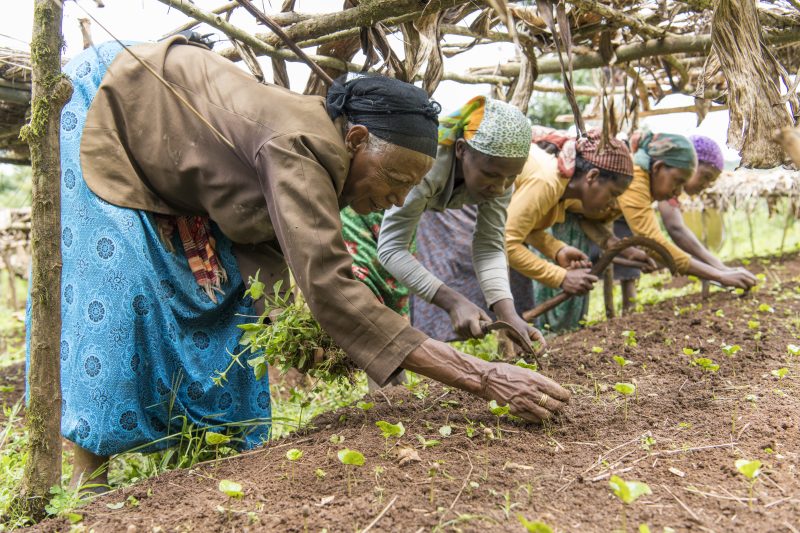
Informal work describes people who work in industries that offer little legal or social protection, such as health insurance or paid sick leave. These industries have little or no regulation by government and operate outside of established labour laws that protect worker’s rights. Industries such as small scale farming, domestic work and street vendors are among those deemed as informal. 61% of the world’s workers are informal workers and in low-income countries 92% of women work informally.

How has COVID-19 put women working in the informal sector at greater risk of violence?
- Increase in state violence. As countries all over the world locked down to prevent the spread of the virus, law enforcement were given greater powers to enforce the new rules. Quickly, accounts of these powers being abused began to surface. Beatings, shooting and arbitrary detentions of women working in the informal sector have been carried out under the guise of enforcing lockdown measures. In Uganda Womankind partner Strategic Initiative for Women in the Horn of Africa (SIHA) reported women street vendors being beaten by state operators in Uganda.
- Loss of livelihood and income. With the global production grinding to a halt the demand for informal work was abruptly cut short. Global suppliers cancelled orders of garments, domestic workers were laid off and stranded without pay and markets were shut down. Women who work in the informal economy saw their income fall by 60% in the first month of the pandemic. With no protection from labour laws and little access to social protection schemes women and girls have been forced into precarious situations in order to survive. A lack of independent income makes it difficult for women to make their own decisions, including impacting their ability to leave abusive partners and there have been reports of increased sexual violence against girls across Africa.
- Increase in unpaid care work. Before COVID-19 women did three times as much unpaid care and domestic work as men. As schools closed and healthcare systems became overloaded, it is women who have taken on the bulk of the excess unpaid care work. These additional burdens have contributed to strains on women’s mental health. They have also created an additional barrier to re-entering the paid workforce adding to the cycle of economic hardship and increased risk of violence.
Three ways risk of violence can be reduced for women working in the informal sector
The threat of violence for the 740 million women who make up the informal economy is not inevitable. Concerted effort from key decision makers could protect women’s right to live free from violence.
- Ratify ILO Convention 190. The convention to end violence and harassment in the world of work was adopted by the International Labour Organisation in 2019. The convention holds governments to account and requires them to take action to protect all workers – including women informal workers – from violence and harassment. Governments must officially ratify this convention to protect the rights of women.
- Extend social protections. Women’s economic security and their risk of experiencing violence are inextricably linked. When women have guaranteed income and access to essential services such as healthcare, they are less likely to be financially dependent on abusers and able to escape dangerous situations. Governments must urgently ensure universal social protection schemes that cover all workers especially those working in the informal sector and look to create a just economy that works for all women during the pandemic and after we have recovered.
- Fund women’s rights organisations and movements. Organisations such as Womankind partner Zimbabwe Chamber of Informal Economy Associations and SIHA have been on the frontlines supporting women informal workers and advocating for their rights throughout the pandemic. Women’s rights organisations have the expertise and community connections to provide solutions for women on the ground but continue to operate on a shoe-string budget and be left out of decision making spaces. To build a gender just society, women’s rights organisations and movements must be properly funded and meaningfully engaged.
COVID-19 has showed us that the status quo does not work. Existing inequalities have been deepened and authoritarianism has expanded putting the rights of women and girls at risk. This 16 Days we stand bolder than ever before alongside our partners and the global women’s movement and say enough is enough. End violence against women and girls!