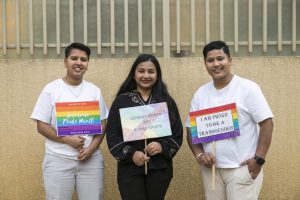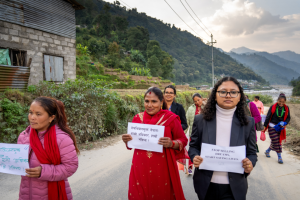

“We must come out and assert our rights in large numbers so that everyone can see us.”

Like many activists, Jeshika Gautam found a sense of identity and belonging through working for the rights of her community. Jeshika is the Outreach Officer at Mitini Nepal, where she and her team advocate for the rights and inclusion of the lesbian, gay, bisexual, transgender, queer, and intersex (LGBTQI+) community.
From love for the community to action
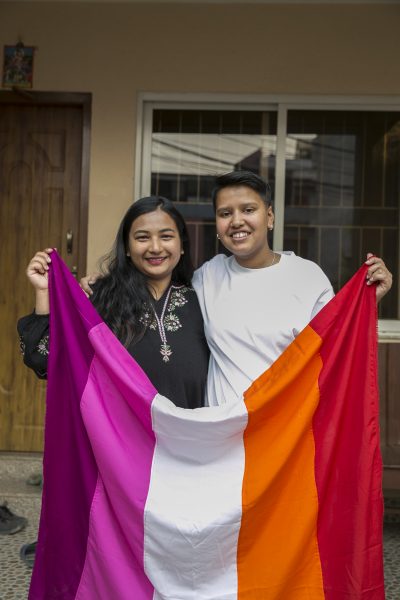
As the Outreach Officer at Mitini Nepal, my primary responsibility is to connect with various LGBTQI+ communities, understand their needs, and effectively organise our programmes and initiatives. I actively engage with community members, dealing firsthand with cases of gender-based violence, creating case studies, and referring them to further counselling as needed. My diverse duties, which range from community engagement and coordination to report writing and programme logistics, significantly contribute to the visibility and impact of Mitini Nepal’s work, helping to promote its mission. I chose to work for Mitini Nepal because of my deep love for the community, my admiration for how Mitini Nepal advocates for LGBTQI+ rights, and my own identity within the community.
I identify as a masculine lesbian. Twelve years ago, I was aware of my identity, but I did not know many LGBTQI+ people. After joining Mitini Nepal, I got to know and meet many members of the community and my work always inspires me to advocate more for them. Now, I have heard and seen diverse stories of LBQ women, not only in Nepal but also on an international level. I have seen many organisations working for the LGBTQI+ community that ignore or fail to address the issues of LBQ women. Their issues are not given priority and are often left at the bottom. Despite their significant presence, LBQ women are being overlooked.
Mitini Nepal’s founder and President, Laxmi Ghalan (they/them), recognised that LBQ women were not given priority. To address this, they became the first person to advocate for LBQ women by establishing the Mitini Support Group in 2002, which was officially registered as Mitini Nepal in 2005. Since then, we have reached many LBQ women and recently formed an LBQ women’s group where over 60 LBQ women from different provinces are connected and share their experiences through social media groups and various programmes. This progress is all possible because of Mitini Nepal. However, there are still many LBQ women who are unaware of their sexuality and cannot come out openly due to social stigma and family pressure.
If I embrace and cherish my identity, I naturally develop a deep connection with my community, understanding the challenges they face, including the harassment and issues they encounter. This understanding is what drives my choice to work at Mitini Nepal.

Life for a lesbian activist
When you identify yourself as a lesbian, people may say or whisper derogatory terms when you are passing by. In professional settings, when disclosing your sexuality, the issues and concerns that you’ve brought forward often fail to receive attention and are instead sidelined or ignored.
People outside of LGBTQI+ communities don’t usually need to declare who they are like we do. As a lesbian, especially a masculine one, I have to keep stating my identity because it’s not always understood like others’ identities are. It’s important for everyone to better understand different LGBTQI+ identities.
Personally, and professionally, I have no problem sharing who I am. But it can cause problems, like when we try to rent a place. Sometimes, landlords won’t rent to us once they know we’re a lesbian couple. Other times, even if we’ve been living somewhere peacefully, they’ll ask us to leave just because of our identity.
My message this Pride Month is clear: hiding is not the solution. We must come out and assert our rights in large numbers so that everyone can see us. We take pride in who we are. The letters in LGBTQI+ represent special and deeply proud identities.
< View all stories