
“Solidarity and togetherness will take us to greater heights as LBQ women”
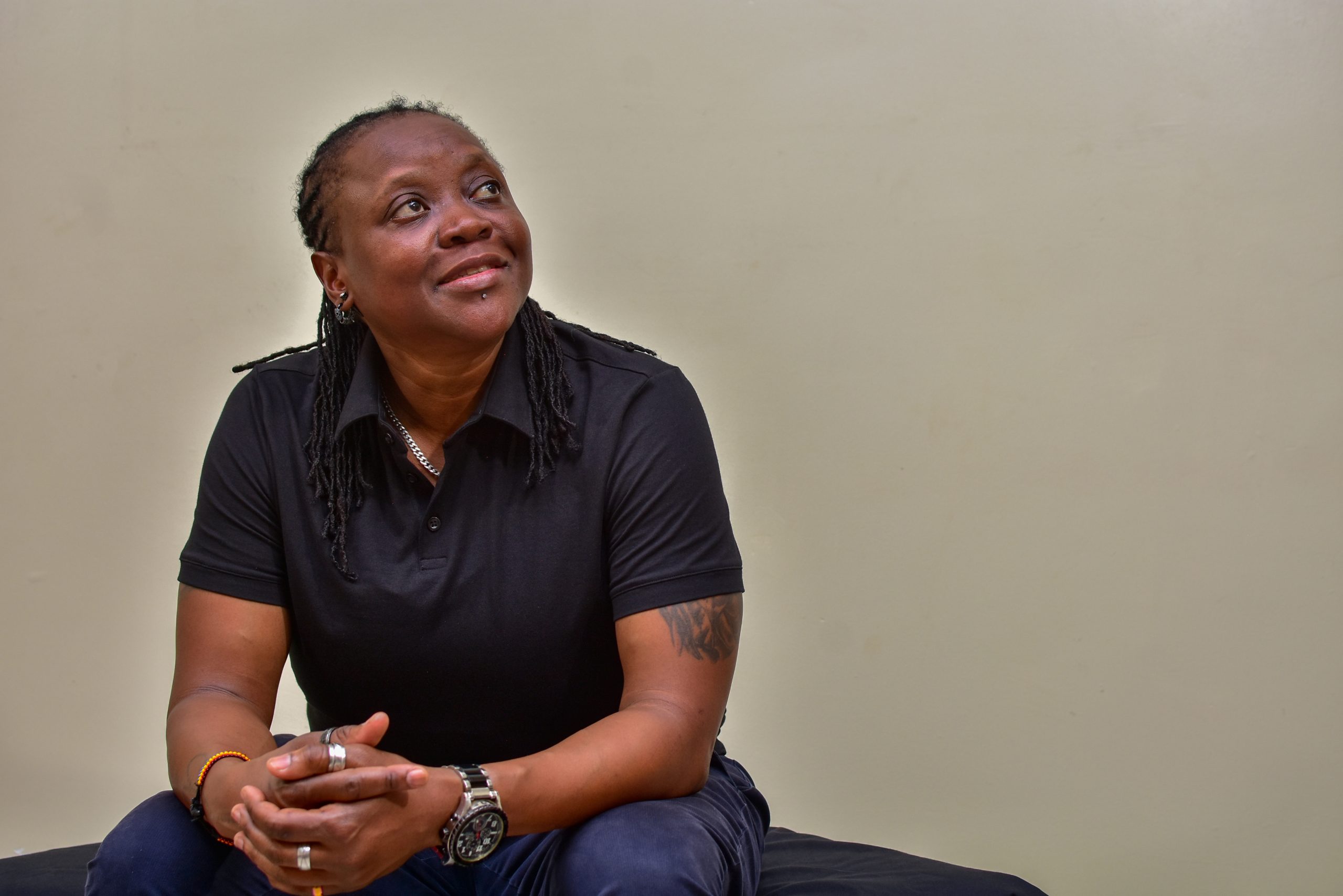
Biggie works with Freedom and Roam Uganda (FARUG) as the team leader. “Some people call it the Executive Director and others call it CEO, but I prefer being the team leader” as she puts it.
From connection to finding a calling
As a lesbian, I didn’t even know there were other lesbians. I thought I had a condition. It was just a secret that I never wanted anybody to know about, until everything started changing.
I had to look for people who were like me, so I got to know people who were hanging around a bar called Dizzy Drop. Every evening I had an opportunity to go there, meet like-minded people and that was enough for me. FARUG was formed in my presence in that bar. But, back then I was still a student and I didn’t know how important it was to be part of this kind of organising. When they were forming FARUG, I just needed a family. I needed to know that I wasn’t the only person, that there were people who were like me and that I wasn’t an alien. To know that there are some people who feel like me, who reason like me, who love like me.
We used to have FARUG as our social place, just to hang, find like-minded people and then go home. It was actually a straight friend of mine who directed me to Dizzy Drop . Imagine, a straight friend directing me to a place that is going to make me who I am today. Along the way, at college, I decided to start volunteering with FARUG because I felt like there was a calling I needed to be part of. As a volunteer, I did different campaigns and then I realised, I need to serve my community. Eventually I became a Treasurer of FARUG and then afterwards I became a Director. My journey was to serve.
Being a pillar of support for your community
 I started thinking about the LBQ people that haven’t told their story. They don’t even know where to start from. They don’t know where to get help or have information on anything. I offered myself to be able to take that information to people who are like me or those that may not understand the work that we do as FARUG. That’s how I started my journey and that’s how important FARUG is to me. It’s my calling.
The beauty of being part of management after being a member is that you get to see things in a clear mode. The essence of you wanting to help someone who is in the dilemma that you faced before, pushes you to this space. When you come into FARUG you want to do more and more things and you want to nurture more and more people.
As lesbians, we are too silent. We don’t talk about most issues and sometimes we get timid because of the presence of other people. But then the motivation comes from those of us who have already taken up the space. We now encourage others to take part. Today, in all the parts of Uganda, we have representatives there that can support the communities that they are living in and inform them of FARUG and what we can do.
What it means to be an LBQ woman
Before we are lesbians, we are women. Women who experience every discrimination. Misogyny and everything else. The fact that we are discriminated against at a certain level because we are not the “ideal woman” makes LBQ women special. Because every space you go to, you must explain, which kind of woman you are. But we shouldn’t have to explain, because as long as you’re a woman, you’re a woman, regardless of how you appear. But, when it comes to LBQ women, you must explain.
A call for solidarity and unity
The future for LBQ community in Uganda is solidarity and unity, because that’s still lacking and we need it to be able to collectively deal with our situations or issues. FARUG is geared up to forefront that and collectively work together. No one can front our issues apart from us because we are the ones experiencing all these things.
My message this Pride Month is: solidarity and togetherness will take us to greater heights as LBQ women.

From supporting FARUG to hold the Ugandan Lesbian Forum (UGALEF) to them now being one of Womankind’s Strategic Grant partners, this Pride Month we’re celebrating FARUG and all of the work they do to support the LBQ community in Uganda.
< View all stories