Flexible feminist funding for women’s food security, seed sovereignty and leadership
By Bella Matambanadzo and Rungano Muchetu
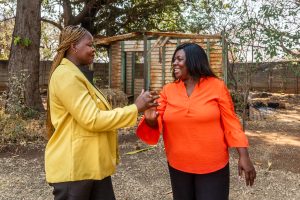
Zimbabwean feminist activist Thandiwe Chidavarume leads an African feminist organisation whose mission is simple: To place land into the hands of rural women in Zimbabwe.
The National Co-ordinator of the non-governmental organisation (NGO) Women and Land in Zimbabwe (WLZ) Chidavarume knows that land is an enduring resource. Its preciousness is not only due to its inheritability across multiple generations, it is also a treasured agricultural input. One that enables the rural women who plough it to grow food for their own nourishment as well as that of their children.
“A woman is the one that is responsible for making sure that the children and family are well fed,” Chidavarume explains. “If children have malnutrition, it is the woman that is blamed for not taking good care of the child or children.”
In the Makoni region of eastern Zimbabwe, Chidavarume sits together with the rural women that her organisation stands in solidarity with. They discuss the forthcoming planting season and their plans to prepare their fields in good time for the imminent rains.
“Her Voice Fund (HVF) gives women dignity. It builds and restores their sense of worthiness,” Chidavarume explains of the flexible feminist funding mechanism created by Womankind Worldwide in 2021.
Collective Feminist Agency and Power
Since its establishment, HVF has supported forty-six (46) feminist and women’s rights groups with grants in five countries across the world. Twenty-two of them are informal or unregistered collectives of women. WLZ is one of 11 women’s rights groups in Zimbabwe that have received funding over the last four years.
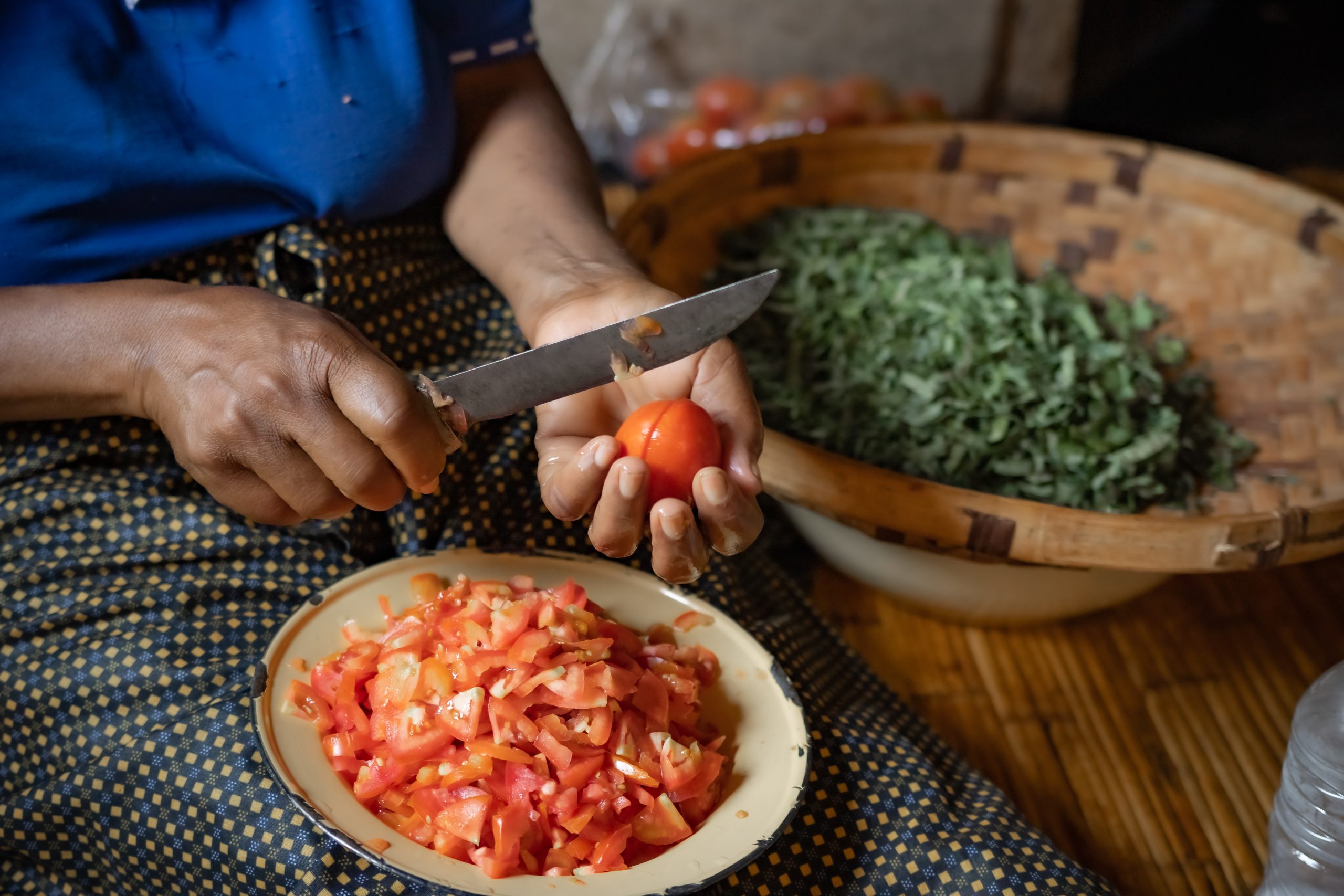
“When women grow groundnuts, they know that they will have good nutrition. They can make peanut butter for the children. Or Bambara groundnuts and beans, so that the family is well fed. This gives them the sense of being a full woman. It removes the idea of children not having food, which makes any woman feel worthless,” Chidavarume explains. “Instead of children going to school with junk foods, now a child can go with potatoes or sweet potatoes coming from seeds from traditional foods.”
Through WLZ, Chidavarume organises the women she works together with into cluster groups that are affiliated with the Rural Women’s Assembly (RWA), a rural women’s group whose membership runs into about 5000 women.
“For rural women, the issue of advocacy through numbers works. If you go to the Chief alone and advocate, the Chief doesn’t really pay attention to your issue. But if you go as a group, it will work. So, for us we believe in our model of advocacy through numbers. That’s why we mobilise,” says Chidavarume.
With the resources from the HVF, WLZ has hosted rural women’s dialogue sessions. The organisation has also conducted feminist transformational leadership training programmes and advocacy training workshops for rural women, whose remote locations mean they are often far away from being within easy reach of duty bearers located in mostly urban government offices.
The Sounds of Feminist Freedom
“We can use different tools to advocate. We use songs. We sing. As RWA, we know that there are some people who we can’t approach. So, we sing to that person to give our message. When we speak of advocacy, we know sometimes it can be harmful. Especially looking at African politics. If you go against what is wanted by the ruling government you will be labelled as revolutionaries who want to bring about change but we will be affected by the land issues and seed policies. In our advocacy, we sing targeting influencing policies, the allocation of resources, climate change,” Chidavarume explains.
In their rural women’s dialogue spaces, women discuss the quantity and quality of each other’s seed stocks. They share knowledge and information about how to multiply their seed reserves so that each one of them has enough for her household.
“Nowadays, the agriculture sector is largely focused on commercialisation. There is no support in terms of traditional seeds. There are laws that are suppressing them. So, with the HVF, we are lobbying for better recognition for women’s seeds, which are traditional seeds. We want women to own their land and for their traditional seeds to be recognised and protected,” says Chidavarume.
Rural Women’s Transformative Feminist Leadership
Land ownership gives women additional power over their own lives. It enables them to whether the storms of economic instability and expand their opportunities. With support from HVF, WLZ’s meetings enable rural women to discuss how they can secure positions of leadership and decision-making in their communities to ensure that they have a voice and that their needs are represented.
“You see, in rural areas, women constitute the bulk of our population numbers, but in terms of participation in decision-making, they are few. Which means women are being used to put men into power. But we can take advantage of our numbers and advocate so we can put ourselves into power as rural women,” Chidavarume says.
As the world grapples to find sustainable solutions to the dire impacts of climate injustice, leaders such as Chidavarume and the women she stands together with, show that very often the answers to difficult challenges lie in replicable models of rural collective feminist transformative leadership.
About Her Voice Fund (HVF)
HVF provides flexible funding flexible funding to women’s rights and feminist organisations and activists in the Global South with an intersectional focus, supporting them in their advocacy efforts to influence policy at the local, national, regional and international levels.
Rungano Muchetu is a young African feminist researcher from Zimbabwe interested in how public policy can secure women’s land, property and agrarian rights. She thrives when designing feminist participatory research methodologies and conducting interviews in excluded and marginalised communities. She has led research for Dialogue on Shelter on poor women’s housing rights in Zimbabwean townships, supported land rights research at the Sam Moyo Institute for Agrarian Studies (SMIAS). Her then six-month-old daughter Tamara was the youngest and most active participant at the 2024 Awid forum in Bangkok, Thailand.
Bella Matambanadzo is an African feminist activist, organiser and strategist from Zimbabwe. Her scholarship, analysis, writing, research and convening skills are highly sought after globally. She researched and wrote A Room of Her Own for Dreilinden focussing on the liberatory effects of property ownership for Zimbabwean LBQ groups. Together with Professor Rudo Gaidzanwa, she researched, co-wrote and edited A Beautiful Strength, A Journal of 80 Years of Women’s Rights Activism in Zimbabwe since 1936. She is published by Margaret Busby in the second edition of the opus New Daughters of Africa; by Weaver Press; by Dr Patricia McFadden in the Southern African Feminist Review, SAFERE; by Dr Sylvia Tamale in African Sexualities, and elsewhere.