


Tech-Facilitated Gender-Based Violence (TFGBV) is on the rise. This type of violence manifests in various ways including cyberstalking, defamation, doxing, harassment, revenge porn and online abuse. Like offline forms of GBV, TFGBV is deeply linked to broader societal issues. It perpetuates harmful stereotypes, cultural and social norms, and patterns of unhealthy masculinities that discriminate against women and girls. There is an urgent need to create policies and digital spaces that truly protect women and girls in all their diversities from TFGBV.
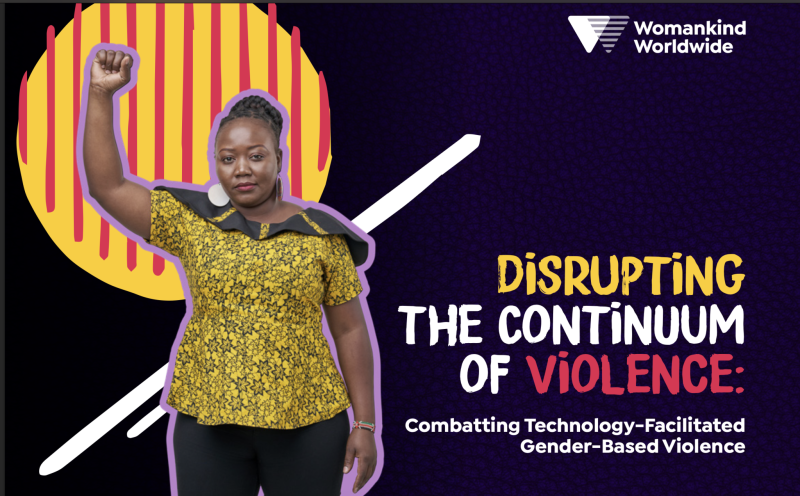
That’s why, during this year’s 16 Days of Activism, Womankind took action towards ensuring the safety, dignity, and protection of women and girls online. We published a policy brief on TFGBV (written and researched by Marie-Simone Kadurira), which highlights the urgent need to tackle its root causes and impacts. It calls for an immediate, coordinated action, stressing that a comprehensive, multi-faceted approach is essential to ending TFGBV and creating sustainable change.
The research was informed by interviews with partners and allies, and built on resources including Womankind’s 2018 publication, Breaking the Silence: Ending Online Violence and Abuse Against Women’s Rights Activists.
The policy brief revisits and expands Womankind’s analysis of TFGBV and was informed by feminist participatory action research and ensured that the lived experiences and insights of women affected by TFGBV were centred in the analysis and recommendations. The policy brief focused on Womankind focus countries: Afghanistan, Ethiopia, Kenya, Nepal, Tanzania, Uganda, and Zimbabwe. Framing clear and urgent messages, the brief called for immediate legal and policy reforms, stronger protections for women and girls online, and enhanced accountability from tech companies, policymakers, and state actors. It emphasized the importance of survivor-centred, inclusive approaches that actively engage civil society, particularly grassroots women’s rights organizations. The campaign also enhanced the visibility of Womankind and its partners’ efforts on TFGBV, leading to increased engagement from stakeholders and sector allies. Notably, this included a radio interview with Jill Anami, on Voice of Islam collaboration opportunities with the NUMUN Fund and ongoing conversations with the Ford Foundation around funding support, all contributing to the advancement of Womankind’s expanding work on TFGBV.
Through the digital campaign and policy brief, Womankind raised awareness about TFGBV and contributed to legislative, administrative, and societal changes that protect women and girls from digital abuse, while promoting gender equality and digital safety for all.
We created evidence-based recommendations, including platform accountability, the creation of national reporting mechanisms, survivor-centred legislation, and the drafting or amendment of cybercrime laws that were instrumental in informing lawmakers, like-minded allies, and the tech sector about the scope, impact, and urgency of TFGBV. We centred partner voices in the policy brief, ensuring the recommendations were context-specific, survivor-centred, and reflective of diverse experiences.
Expanding the feminist knowledge base on TFGBV is a crucial part of Womankind’s role as an advocate in the global movement.
Back to the Influencing the Agenda in 2024/25


